Drain Cleaning in Grove City OH: What Every Home Needs
Every drain in your home is quietly working against gravity, grease, hair, and soap scum on a daily basis. For homeowners in Grove City, OH, that ongoing battle eventually shows up as slow drains, gurgling pipes, or a full backup that turns a Tuesday evening into a plumbing emergency. Understanding how drain cleaning works, when to take action, and what keeps your system flowing reliably is the kind of knowledge that saves real money over time.
Why Drain Health Matters More Than Most Homeowners Realize
Your home's drain system is a network of interconnected pipes that handles everything from dishwater to shower runoff to toilet waste. When one section slows down, the pressure and flow shift across the whole network. A partial clog in a single branch line can stress joints, trap gases, and accelerate buildup in other sections you haven't even noticed yet.
In Grove City neighborhoods, older homes near Southwest Boulevard and the Beulah Park area often have cast iron or clay drain lines that are decades old. These materials corrode over time, develop rough interior surfaces, and trap debris far more aggressively than modern PVC pipe. Homeowners in these areas benefit significantly from routine maintenance because problems compound faster in aging infrastructure.
Even in newer construction throughout the Holton Estates or Thatcher Park subdivisions, high-use drains accumulate buildup faster than most people expect. Hair, soap, cooking grease, and mineral deposits from hard water don't take long to narrow a drain line significantly.
Common Causes of Clogged Drains in Grove City Homes
Knowing what creates clogs helps you prevent them and helps you explain symptoms accurately when you call a professional. The most frequent culprits break down by drain location:
- Kitchen drains: Cooking grease is the primary offender. It enters the drain as a liquid but solidifies as it cools, coating pipe walls with each rinse. Food particles, coffee grounds, and starchy residue from pasta or rice compound the problem quickly.
- Bathroom sinks and tubs: Hair is the dominant cause. Soap scum binds to hair strands and creates dense, sticky blockages that expand over time. The P-trap just below the drain catches the earliest stage of these clogs.
- Toilets: Flushing items beyond human waste and toilet paper is responsible for most toilet blockages. Wipes marketed as flushable, cotton swabs, paper towels, and hygiene products do not break down in drain lines.
- Floor drains and laundry lines: Lint, detergent residue, and sediment accumulate in these drains, which are often overlooked during routine cleaning because they are used less frequently.
- Main sewer line: Tree root intrusion is a serious concern throughout Grove City, where established neighborhoods have mature trees with aggressive root systems. Roots seek moisture and can enter the sewer line through joints or small cracks, eventually causing partial or complete blockages.
Signs Your Drains Need Professional Attention
Recognizing the warning signs early prevents minor buildup from becoming a costly repair. Pay attention to these indicators in your Grove City home:
- Slow draining: Any drain that empties noticeably slower than it used to is showing early-stage buildup. One slow drain points to a localized clog. Multiple slow drains often indicate a problem deeper in the main line.
- Gurgling sounds: Air trapped behind a partial blockage escapes through the nearest fixture, creating gurgling noises in sinks or toilets when other drains are used.
- Recurring clogs: If the same drain clogs repeatedly after being cleared, the obstruction was never fully removed or there is a structural problem in the pipe itself.
- Foul odors: Organic material decomposing inside drain lines produces sulfur or sewage smells that rise through fixtures, especially in infrequently used bathrooms.
- Water backup in multiple fixtures: When a toilet flush causes water to back up in a nearby tub, the main sewer line is the likely source of the problem, not an individual fixture drain.
If you notice any of these signs, reaching out for professional Drain Cleaning before the situation escalates is always the smarter financial move.
Drain Cleaning Methods Professionals Use
Not every clog responds to the same approach. Experienced plumbers select their method based on the location of the blockage, the type of debris involved, and the condition of the pipe. Here are the main techniques used in residential drain cleaning:
Drain Snaking
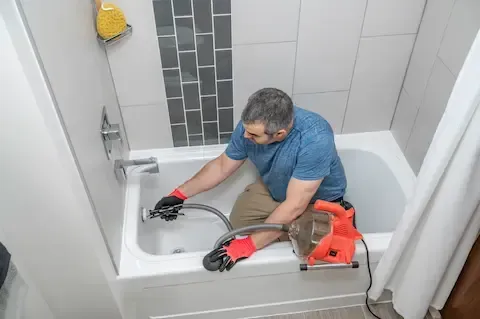
A drain snake, also called an auger, is a flexible cable that is fed into the drain to physically break apart or retrieve a blockage. Manual snakes work well for shallow clogs near the fixture opening. Electric snakes reach deeper into branch lines and are effective for hair, soap buildup, and soft organic clogs. This is often the first method a plumber deploys for a straightforward clog.
Hydro Jetting
Hydro jetting uses pressurized water, sometimes reaching 4,000 PSI, to scour the interior walls of drain pipes. Unlike snaking, which punches through a clog, hydro jetting removes the buildup coating the pipe walls entirely. This method is particularly effective for grease accumulation in kitchen drain lines and for restoring flow in main sewer lines. It is not appropriate for older, fragile pipes that may not withstand high pressure.
Video Camera Inspection
A waterproof camera mounted on a flexible cable gives the plumber a real-time view inside your drain lines. This is how professionals locate root intrusion, pipe offsets, cracked sections, and blockages that are too deep for standard clearing methods. Camera inspections are highly recommended before purchasing an older home in Grove City and after any significant drain event to confirm the line is fully clear.
Bio-Enzyme Treatments
For maintenance rather than emergency clearing, enzyme-based drain treatments introduce beneficial bacteria that digest organic material inside pipes. These treatments work slowly and are not effective on fully blocked drains, but used consistently they reduce buildup in kitchen and bathroom lines between professional cleanings.
What to Avoid When Dealing with a Clogged Drain
Homeowners often reach for quick fixes that create bigger problems down the line. These are the most common mistakes worth avoiding:
- Chemical drain cleaners: Liquid chemical cleaners are caustic and can damage older pipes, especially cast iron and PVC. They also rarely remove a clog completely and can trap chemical residue in the line, making a plumber's job more hazardous. Repeated use causes more harm than the clog itself in many cases.
- Over-relying on garbage disposals: A disposal grinds food, but it does not eliminate the grease and starchy residue those foods carry. Running cold water through the disposal for thirty seconds after each use helps push material through, but it is not a substitute for keeping grease out of the drain entirely.
- Ignoring slow drains: A slow drain feels manageable right up until it stops entirely, often at the worst possible moment. Treating a slow drain early is far less disruptive and less expensive than clearing a complete blockage or repairing a pipe damaged by long-term pressure buildup.
- DIY snaking without experience: An improperly used drain snake can scratch pipe interiors, push a clog deeper rather than remove it, or even puncture a weakened pipe section. Using a snake without knowing how far to extend it or how to retrieve it safely is a common cause of secondary damage.
Routine Drain Maintenance for Grove City Homeowners
Prevention is less expensive than repair, and most drain maintenance habits take almost no time to build into a household routine. Drain screens or hair catchers in every shower and tub drain make a measurable difference in how quickly bathroom drains accumulate buildup. Emptying them weekly takes thirty seconds.
In the kitchen, pouring cooking grease into a container and disposing of it in the trash rather than the sink is one of the highest-impact habits a Grove City homeowner can adopt. Running hot water through the kitchen drain for a full minute after washing dishes helps push remaining residue through the line before it has a chance to cool and adhere to pipe walls.
Professional drain cleaning on a scheduled basis, typically every eighteen to twenty-four months for an average household, prevents the gradual buildup that causes emergency calls. Homes with older plumbing, large families, or known tree root issues near the sewer line benefit from annual service. Reading up on what happens when preventive maintenance is skipped is worthwhile. A solid Grove City sewer backup repair guide explains the downstream consequences in detail.
Local Considerations for Grove City Drain Systems
Grove City's water supply carries moderate to hard mineral content, which means calcium and magnesium deposits gradually coat pipe interiors over years of use. This mineral scaling narrows the effective diameter of drain lines and creates rough surfaces that trap debris more aggressively. Homes that have not had drain lines inspected or cleaned in five or more years may be dealing with significant scaling even if they have not had an obvious clog.
The municipality maintains the main sewer lines under city streets, but the lateral line connecting your home to the city main is the homeowner's responsibility. In older sections of Grove City near Columbus Street and the SR-104 corridor, these laterals were installed decades ago and may have joints or pipe materials that are particularly susceptible to root intrusion and settling. Understanding where your responsibility begins and the city's responsibility ends is important before any major drain repair conversation.
When Drain Cleaning Becomes a Larger Repair
Most clogged drain situations are resolved with professional cleaning. However, some conditions require repair rather than clearing alone. A pipe that has cracked, collapsed, or settled significantly will continue to cause problems regardless of how many times it is cleaned. Recurring clogs in the same location, especially when camera inspection reveals physical pipe damage, are signs that the drain line itself needs attention rather than just clearing.
Root intrusion that has progressed beyond surface tendrils into full root masses may require mechanical cutting combined with pipe lining or a section replacement to resolve permanently. These situations are more involved but are handled routinely by plumbers working in established neighborhoods throughout Grove City. Catching them with a camera inspection before they become emergencies gives you time to plan the repair on your schedule rather than in crisis.
Staying ahead of drain issues in your Grove City home comes down to understanding what your system handles daily, recognizing problems early, and partnering with a qualified local plumber for maintenance and repairs. A well-maintained drain system runs quietly in the background, which is exactly where it belongs.
